Reading
The RookReading becomes the site of a deliberate Grafter demonstration: an attack on a police station that turns into a rapidly escalating emergency for the Checquy. The incident links Graaf Gerd de Leeuwen’s threat to a weaponized entity, tests Myfanwy’s command under pressure, and leaves the fate of the people absorbed into it unresolved.
The threat reaches Reading
A fax addressed to Rook Thomas arrives in ornate copperplate. In it, Graaf Gerd de Leeuwen claims responsibility for unleashing a small horror in Reading to demonstrate Grafter capabilities, warns that John Perry’s home may soon be destroyed, and says he looks forward to seeing Graaf Ernst von Suchtlen on Tuesday. The message makes the outbreak more than an isolated supernatural emergency: it is framed as a calculated warning from an enemy who is arranging a further meeting.
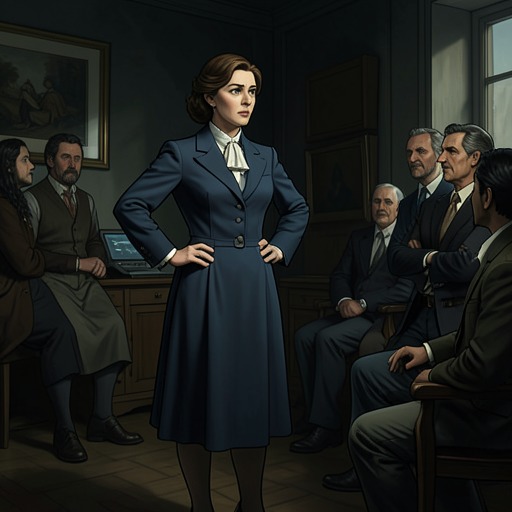
As Myfanwy reads, the office lights flicker and the alarm sounds. Ingrid Woodhouse takes a call and confirms an outbreak in Reading; Myfanwy has already inferred the location from the warning. The response is complicated by the setting: the incident is inside a police station, not an empty or remote site. The station stands in the middle of town, but its occupants have sealed off the building, and portable operation centers are being prepared for the Checquy team.
The police-station attack
Pawn Cyrus West briefs Myfanwy on the reports. A seemingly nondescript man enters the station, kills the person nearest the door, locks it, and resists the officers’ attempts to stop him. Gunfire does not incapacitate him. He then produces appendages from his arms, attacks people in the room, and absorbs them into his expanding body. The account reaches the response team as an emergency call from the police chief, making the police station itself both the source of the crisis and the place from which its scale is communicated.
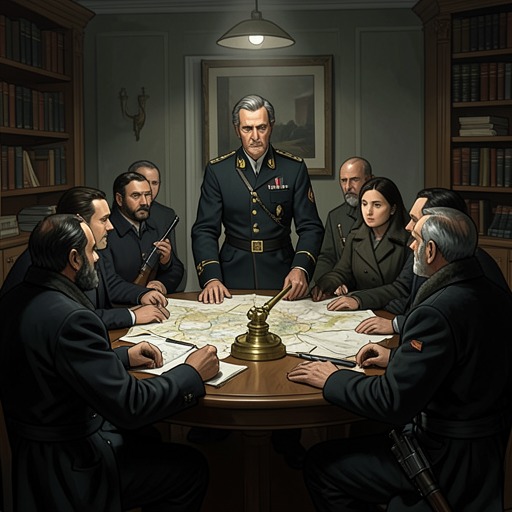
The entity’s growth transforms the incident from a violent breach into a threat to the surrounding operation. Myfanwy recognizes a resemblance between the site’s smell and the earlier Bath incident after Pawn Steele points it out, connecting Reading to another manifestation without assuming that the same response will work. She says the previous manifestation consumed three Checquy teams, including members of the Barghests, before the Checquy went in, and that she nearly suffered severe harm herself. Because the Reading site is already causing her a headache, she orders personnel not to approach and asks that no more Checquy members be drawn into an entity whose behavior cannot be relied upon.
Containment and the choice to destroy
The police station’s location in the town center makes discretion part of the emergency. Myfanwy asks whether the incident is contained and whether it can be kept discreet; Ingrid reports that the police have sealed the building. Later, reports begin appearing online, though not through reputable sources. The Checquy must therefore confront not only the entity but also the risk that a public incident will expose what is happening.
Cyrus tells Myfanwy that the people inside the entity cannot be retrieved. She accepts that assessment and concludes that the only attainable outcome is to end the incident quickly. She orders the flesh entity destroyed and proposes cauterizing the entire site. Conventional demolition or fire agents are considered, but the information Myfanwy shared during the journey makes their effectiveness uncertain. The choice is grimly practical: the civilians absorbed into the entity cannot be recovered, so the priority shifts to stopping the danger from growing further.
That danger reaches beyond the station. The entity sends muscular appendages through a wall and attaches them to the incident trailer, then begins pulling the trailer toward the building. Myfanwy orders everyone out and directs Checquy troops to fire on the appendages, while asking for Steele and his chainsaws. The mobile command center, intended to coordinate the response from outside the station, is itself drawn into the attack. Reading thus turns containment into a moving emergency: the response team must escape the entity’s reach while continuing to fight it.
Aftermath and significance
The later account of Reading confirms that the entity was destroyed before Harper Callahan arrived. At a subsequent meeting, Myfanwy tells Conrad Grantchester that Callahan’s presence had seemed like the best option at the time, and that the entity’s destruction before his arrival was a matter of luck. Reading’s resolution is therefore reported as an achieved but precarious result, not as a cleanly controlled operation.
The incident also remains entangled with the Checquy’s wider crisis. When Myfanwy later confronts Grantchester, he uses the events in Reading to question whether Callahan’s involvement was necessary, even as he reveals that the rest of the Court has not received her summons. After the traitor and Grafter threat become public within the organization, the Court reviews the events in Reading alongside other revelations; Myfanwy gives an incomplete account and avoids disclosing her memory loss. Reading is consequently both a contained emergency and part of the larger struggle over who can be trusted, what the Checquy knows, and how much of its operations can remain secret.
The attack’s defining reversal is that the apparent target—a police station in a sealed-off town-center building—becomes a danger to the Checquy’s own command apparatus. The flesh entity is not merely a hostile presence to be confronted; it makes rescue uncertain, ordinary methods questionable, and the response team itself vulnerable. Reading gives concrete form to Graaf Gerd de Leeuwen’s claim of capability, while forcing Myfanwy to balance the lives already lost against the need to prevent further absorption and contain the threat.